Research Thesis
- Tech Stack: Python, Machine Learning, Deep Learning, SQL
- GitHub URL: Project Repository
- Presentation Video: YouTube Overview
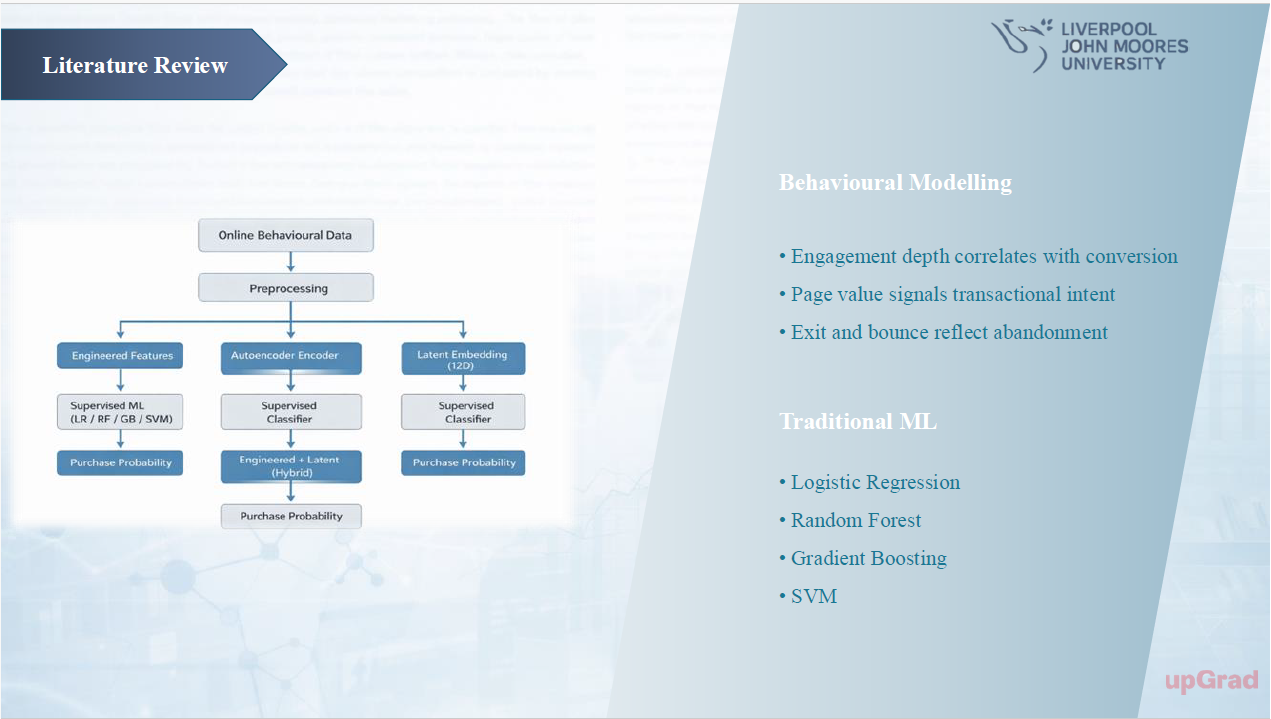
A data-driven predictive modelling study focused on analysing and forecasting online purchase intention using session-level behavioural signals. The research compares traditional machine learning models, representation learning through autoencoders, and hybrid feature integration to evaluate predictive performance, robustness, and practical applicability in digital commerce environments.
Problem Statement: Despite the availability of detailed behavioural interaction data in e-commerce platforms, accurately predicting purchase intention remains challenging. User behaviour is inherently non-linear and evolves through multiple stages, making traditional models insufficient for capturing complex engagement patterns.
Key Objectives:
- Analyse session-level behavioural engagement patterns
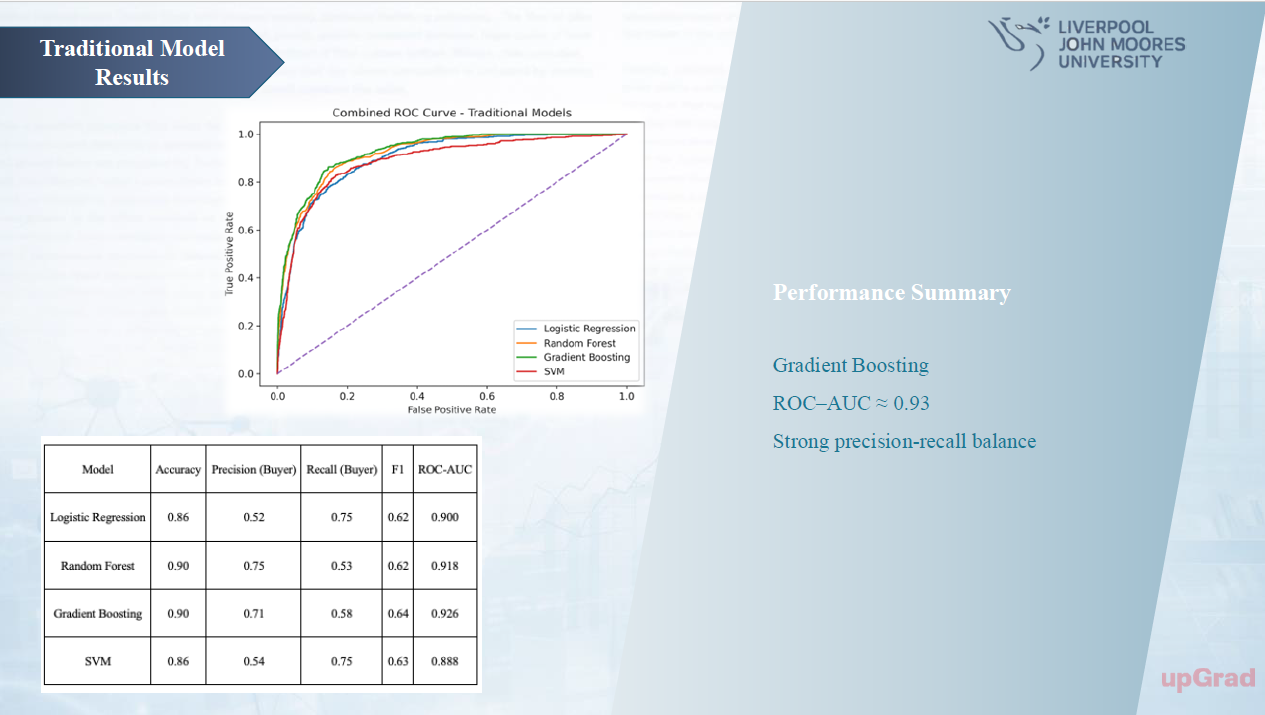
- Develop and evaluate machine learning models
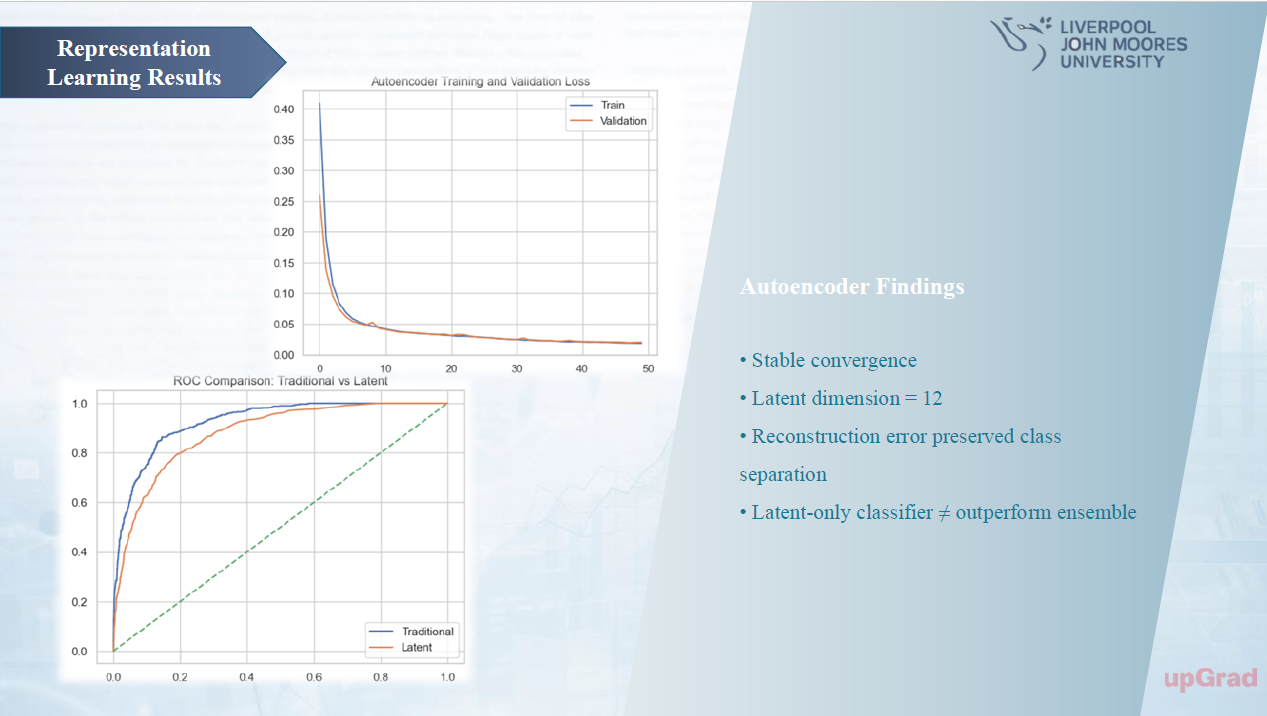
- Implement autoencoder-based representation learning
- Compare engineered features vs latent representations
- Evaluate hybrid feature integration performance
- Perform cross-validation for robustness assessment
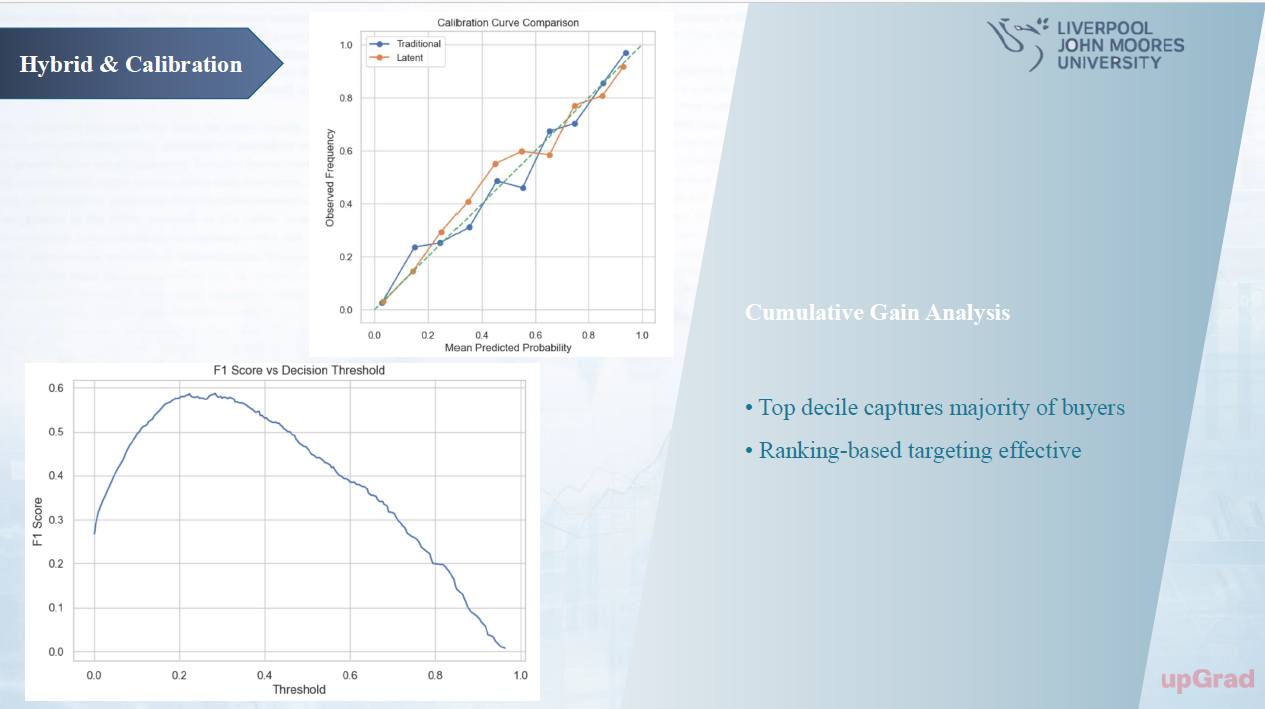
- Conduct calibration and threshold optimisation
- Translate predictions into business insights
Analytical Focus:
- Behavioural engagement indicators (duration, page value)
- Model performance (ROC-AUC, Precision, Recall, F1-score)
- Stability across multiple validation splits
- Calibration reliability and probability accuracy
- Comparison of ML vs representation learning
- Hybrid model marginal gains
- High/Low performing machines
- Ranking-based business evaluation
Key Insights:
- Engagement intensity strongly drives purchase likelihood
- Tree-based models capture non-linear behaviour effectively
- Autoencoders provide abstraction but limited performance gain
- Hybrid models show marginal improvement
- Strong model stability across validation seeds
- Probability ranking enables efficient targeting